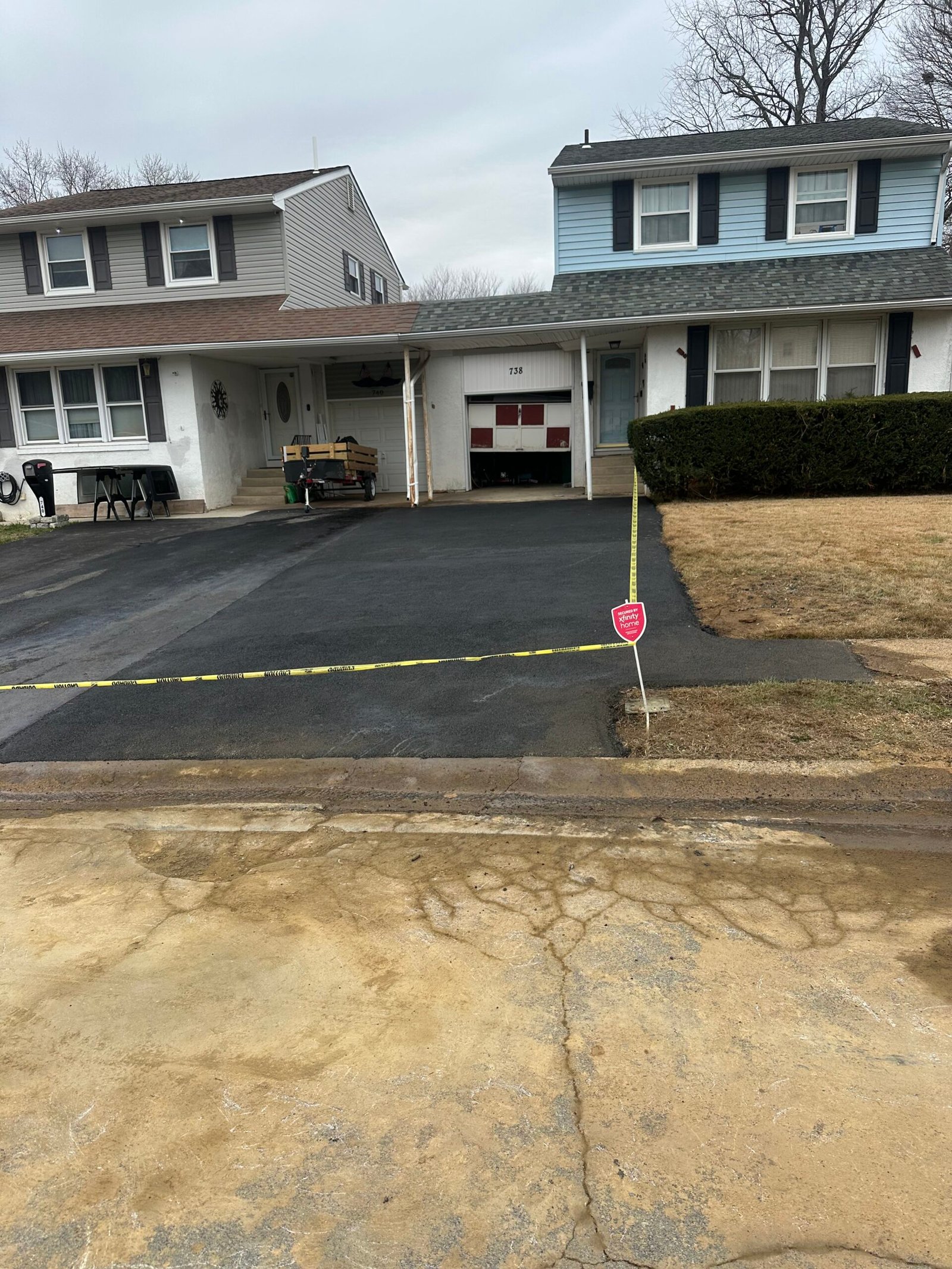
Maybe your family added another vehicle. Maybe you are tired of parking on the lawn when guests visit. Or maybe your original driveway was just never wide enough to begin with. Whatever the reason, a driveway extension is one of the most practical improvements you can make to your Delaware property.
Here is everything you need to know before you start.
Why Extend Your Driveway?
A driveway extension adds usable paved space to your existing driveway. Common reasons Delaware homeowners invest in extensions include:
- More parking. The most common reason. A wider or longer driveway eliminates the need to park on grass, the street, or squeeze multiple vehicles into a space designed for one.
- Better access. Adding a turnaround area or widening a narrow driveway makes it easier to pull in, back out, and maneuver — especially on busy roads.
- Property value. A well-designed driveway extension increases curb appeal and adds functional value to your home. Buyers notice when a property has adequate parking.
- Reduced lawn damage. If vehicles are regularly parked on grass, it kills the lawn, creates ruts, and turns muddy in rain. Paving that area solves the problem permanently.
Planning Your Extension
Before breaking ground, there are a few things to consider:
Permits. In many Delaware municipalities, you may need a permit for driveway work — especially if you are expanding the driveway footprint, changing drainage patterns, or adding impervious surface area. Your contractor should be familiar with local requirements and can advise you on what is needed.
Drainage. Adding paved surface area means more rainwater runoff. Your extension needs to be graded so water flows away from your home, garage, and any neighboring properties. Poor drainage planning leads to problems that are expensive to fix after the fact.
Connection to the existing driveway. How the new section meets the old section is critical. A proper joint between the existing asphalt and the extension prevents cracking and separation over time. The contractor may need to cut back the edge of the old driveway to create a clean, solid bond.
Base preparation. The extension needs the same quality base as a brand-new driveway — typically 6 to 8 inches of compacted gravel. Skimping on the base leads to settling, cracking, and premature failure.
Cost Considerations
Driveway extensions in Delaware generally cost between $3 and $7 per square foot, similar to new driveway installation. The total depends on:
- Size. A simple widening of 200 square feet costs much less than adding a full turnaround area of 600+ square feet.
- Site conditions. Removing trees, roots, or existing concrete adds cost. Flat, clear areas are the most straightforward and affordable.
- Base work. If the area has soft or poorly draining soil, additional excavation and base material may be needed.
- Matching the existing surface. If your current driveway is in good shape, the extension can be added alongside it. If the existing surface is worn, you may want to sealcoat or resurface both sections at the same time for a uniform appearance.
For a typical extension project — say, adding 10 feet of width to a standard driveway — most homeowners spend between $1,500 and $4,000 depending on the scope.
Asphalt vs. Other Materials
Asphalt is the most popular choice for driveway extensions in Delaware for several reasons:
- Cost. Asphalt is significantly less expensive than concrete, pavers, or stamped surfaces.
- Flexibility. Asphalt flexes with temperature changes and minor ground movement, making it well-suited to Delaware's freeze-thaw cycles.
- Seamless matching. If your existing driveway is asphalt, an asphalt extension blends naturally. Once both sections are sealcoated, they look like one continuous surface.
- Speed. An asphalt extension can typically be completed in one day and driven on within 24 to 48 hours.
Concrete is an option if your existing driveway is concrete, but it costs more and is more prone to cracking in Delaware's climate.
Making It Last
Once your extension is in place, treat it the same way you treat the rest of your driveway:
- Wait 6 to 12 months before the first sealcoat application.
- Sealcoat both the extension and the original driveway at the same time for even protection and appearance.
- Address cracks promptly — especially at the seam where the old and new sections meet.
- Maintain proper drainage and keep the edges clear of soil buildup.
With proper maintenance, your driveway extension should last 20 years or more.
Ready to add more space to your driveway? Get a free estimate or call Campos Mora Construction at 302-883-9000. We will visit your property, assess the site, and give you a clear plan and price.
Written by Campos Mora Construction
Need paving work? Get a free estimate.
No obligation, no hassle. We'll assess your project and give you an honest quote.